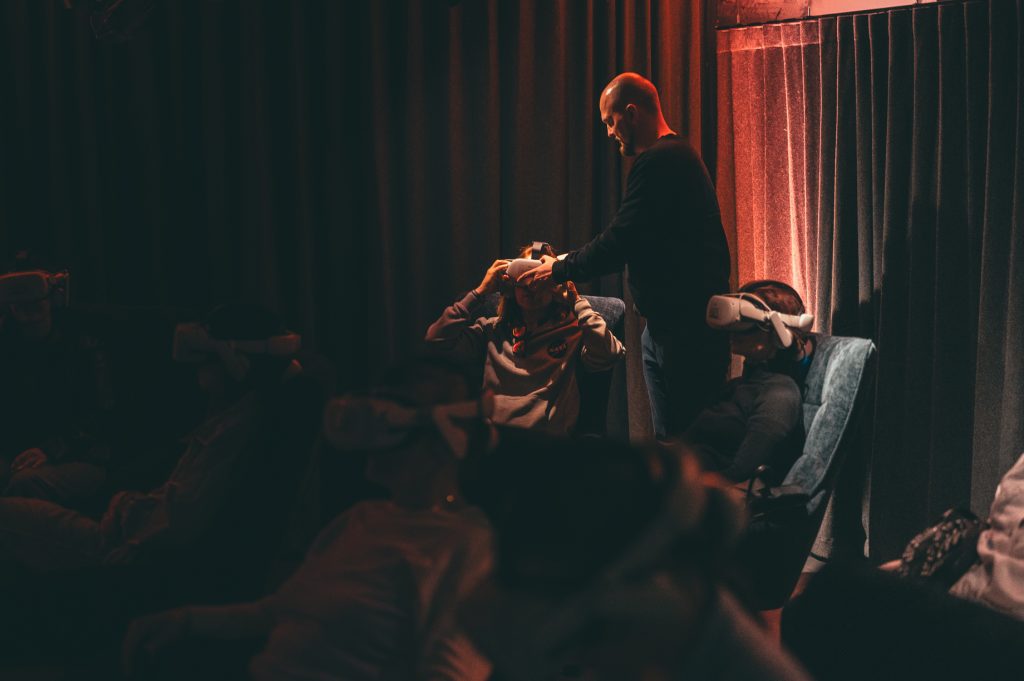
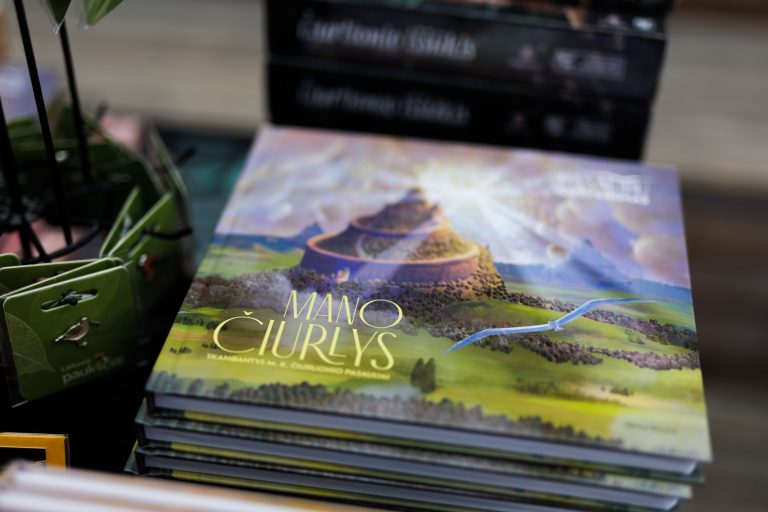
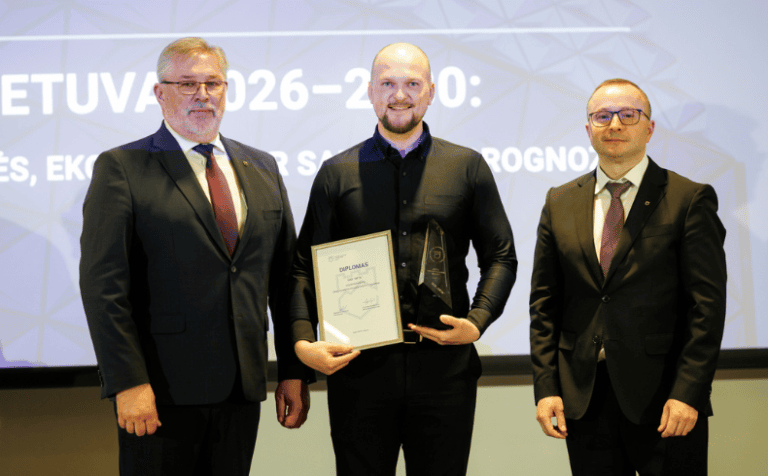
A special event awaits the residents of Klaipėda—the launch of a revamped virtual reality (VR) project by directors Kristina Buožytė and Vitalijus Žukas that immerses viewers in the work of Mikalojus Konstantinas Čiurlionis „Creation of the Worlds“. From now on, it will be enriched with real physical sensations—viewers will not only see and hear, but also feel the wind, warmth, and specially selected scents.
What scents fill the air when you immerse yourself in the wonderful world of M. K. Čiurlionis? What kind of wind blows, or what kind of warmth does the sun radiate in the paintings? From now on, the project’s creators are making it possible not only to see and hear these things, but also to experience them firsthand.
Even if you’ve seen “The Creation of the Worlds,” its multisensory version promises new experiences. These will later be incorporated into the VR experience “Trail of Angels.”
“Now it’s even easier to immerse yourself in a virtual journey and experience it with your whole body,” said Lukas Verpetinskas, the company’s strategic producer for development in Lithuania.
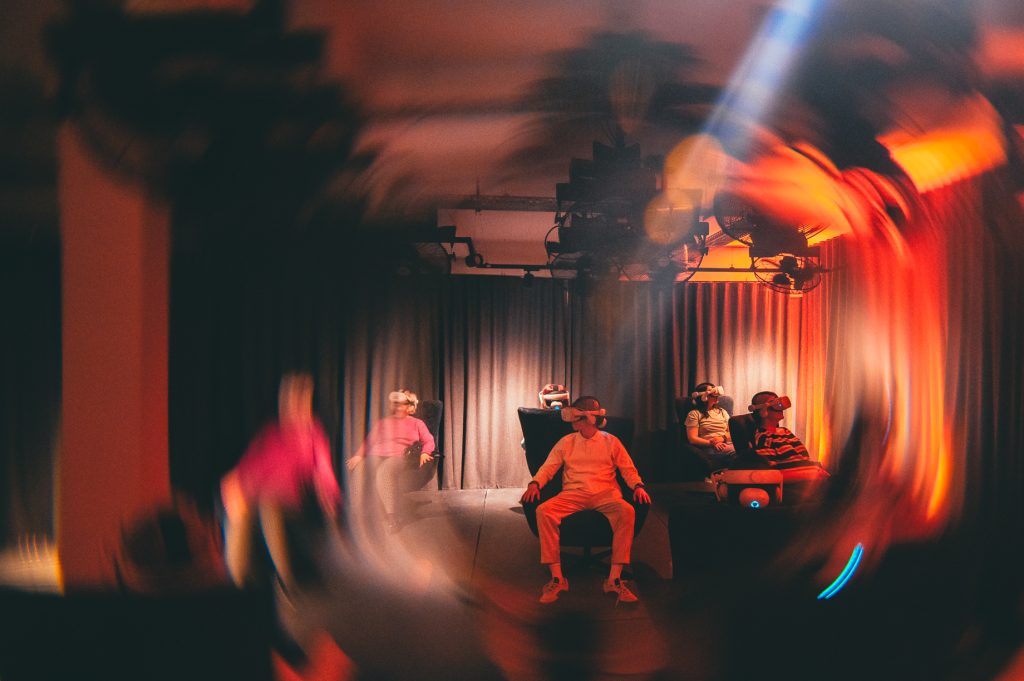
– How did you decide which sensation should be dominant in a particular scene? – we asked L. Verpetinskas.
– We have received requests from visitors to enhance the experience with additional sensory elements: wind, heat, or even water. We listen to our visitors and strive to meet their needs as best we can.
That’s why the development team worked hard on creating the effects—we wanted to enhance the experience with additional sensory elements.
It’s not as if a specific sensation is emphasized throughout the entire piece. We tailored each effect to a specific scene to maximize the emotional impact.
– How does multisensory technology change viewers’ reactions?
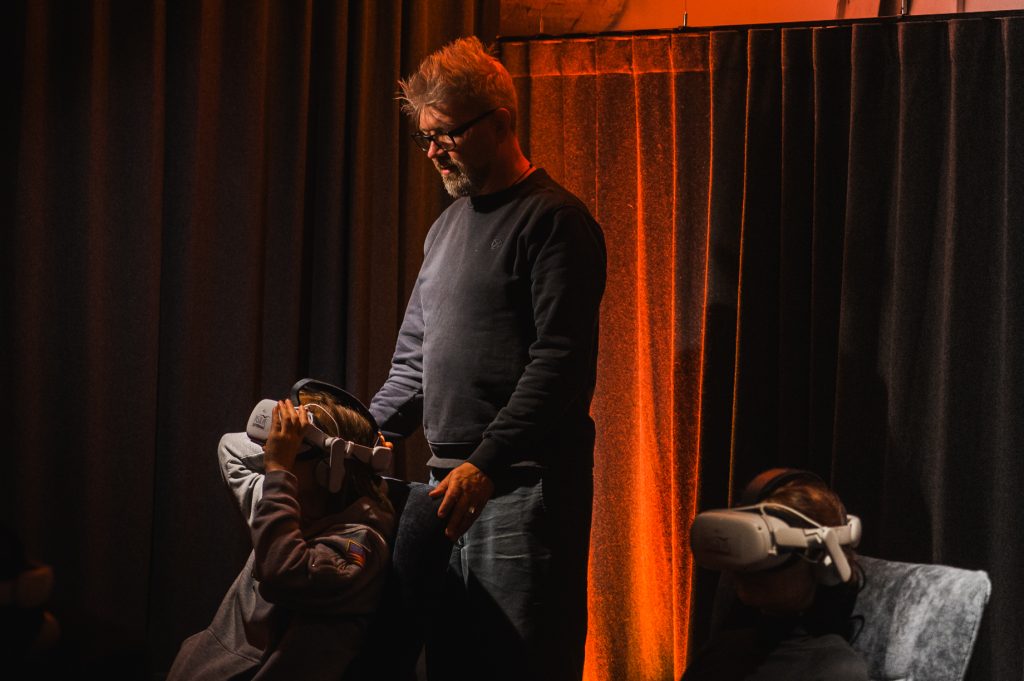
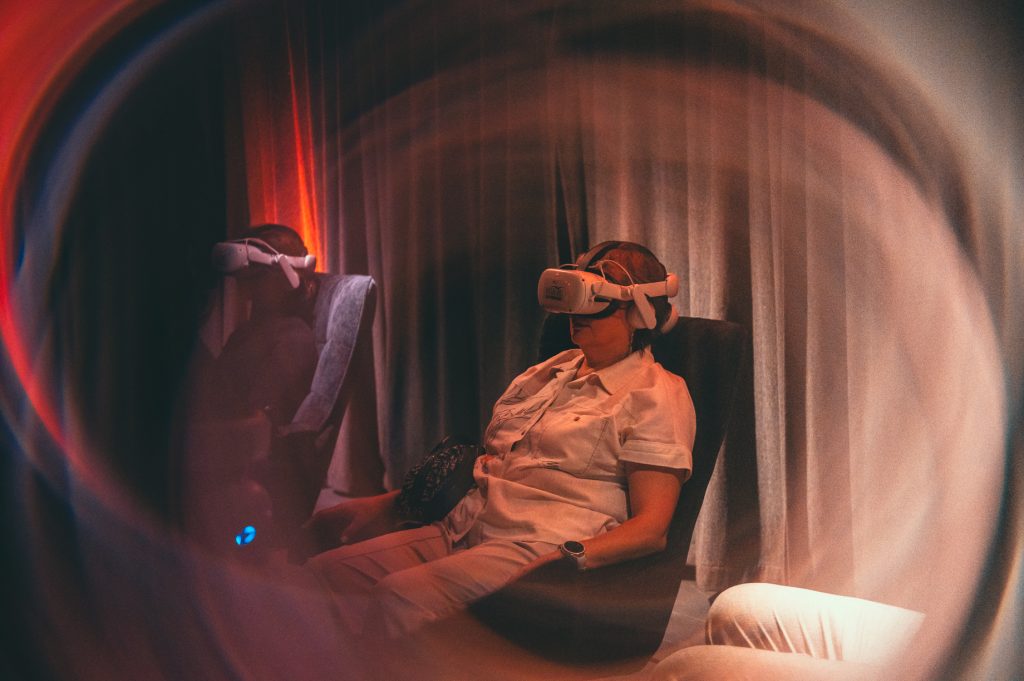
– I’ve seen *The Creation of the Worlds* more than once. Yet when I watched the eight-minute multisensory pilot segment for the first time, it felt as if I were seeing the work for the very first time. The vibrations, the wind, the scents—all of this helps you immerse yourself in the work so deeply that the line between reality and the virtual world seems to disappear.
I was overcome by a feeling as if I were actually stepping into those paintings.
– Can we say that viewers of different ages react differently to
multisensory?
– We don’t have any official data yet. However, we’ve noticed that people react differently.
Men and younger viewers want more intense experiences. Women, on the other hand, prefer more pleasant, less intense ones.
– Are you pioneers in this field?
– You can find similar experiences in the streets of Palanga during the summer, where there are amusement rides, or at Disneyland.
However, that is not an artistic experience. We, on the other hand, are creating a new kind of experience—we enhance a deep, meaningful artistic experience with multisensory elements, allowing the audience to immerse themselves much more fully.
Technology is evolving. Immersive (engaging, encouraging deeper exploration—Ed.) technologies are, too.
We were the first in Lithuania to venture into immersive cinema, and now we’re enhancing it with multisensory technologies that we develop ourselves. It’s a challenging journey. But we love a challenge.
– Will multisensory experiences become commonplace in movie theaters in about 10 years?
– I would venture to say that it won’t even take 3–5 years for the new standard to take hold.
And we will be the first to show the market and the developers of similar immersive centers that this is becoming the norm.
Our country is small. But our virtual world, featuring the works of M. K. Čiurlionis, is vast and serves as a fine example of success not only for Europe but for the entire world.
– Where and when will the multisensory VR version of “The Creation of the Worlds” be available to view in the near future?
– The multisensory version will be on view starting June 3 at the Klaipėda Center for Sensory Art, located at the Culture Factory.