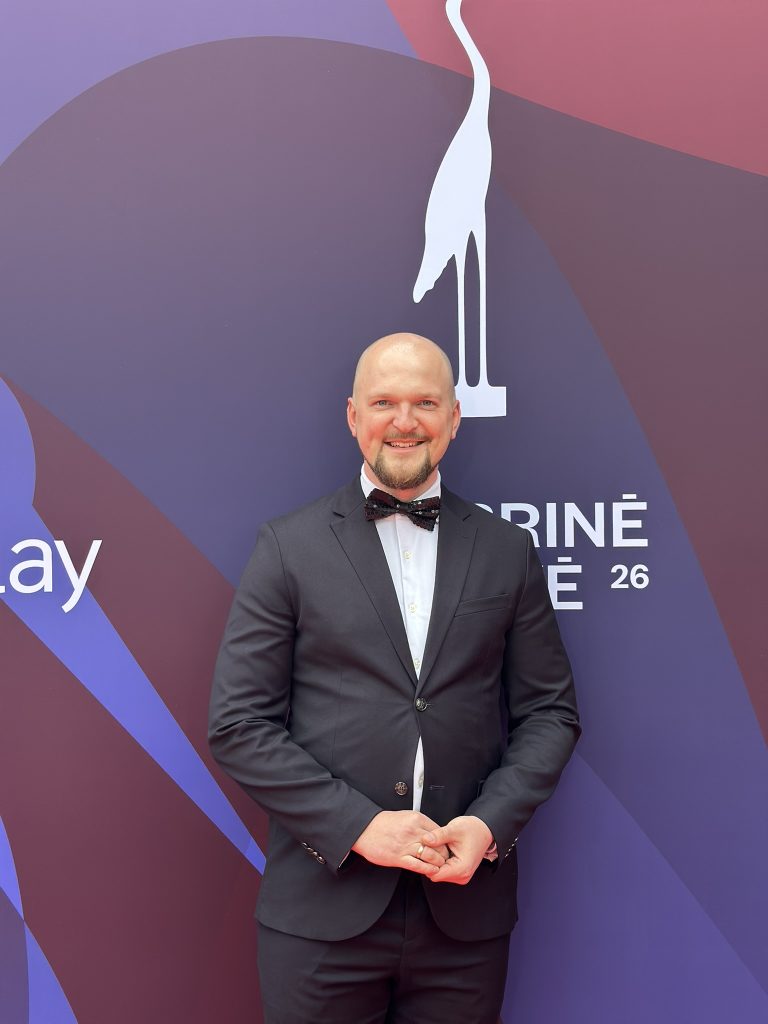
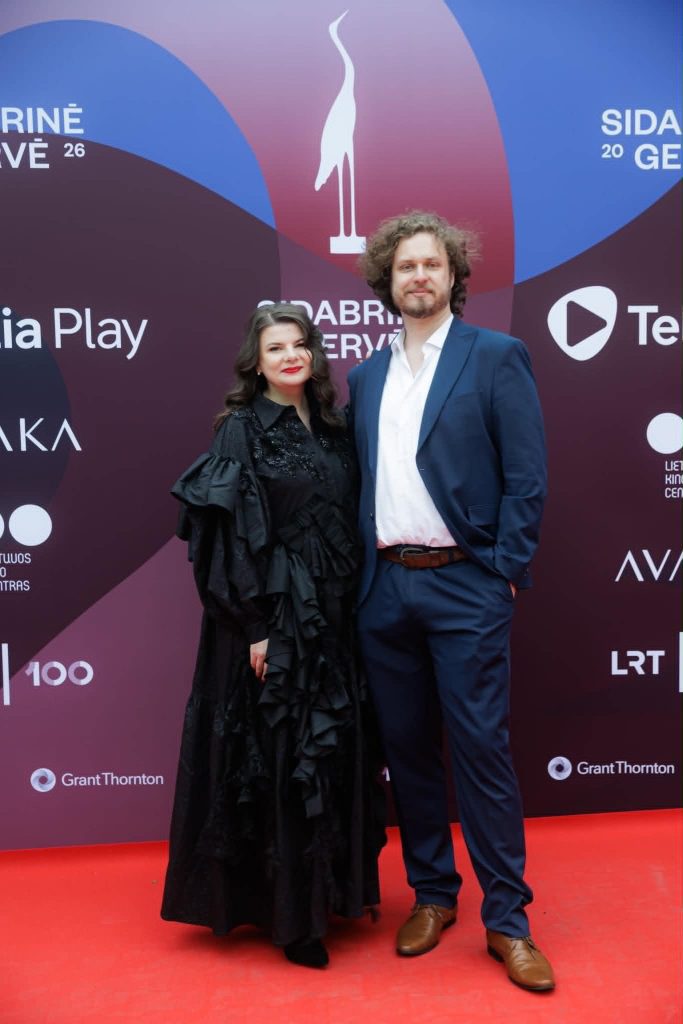
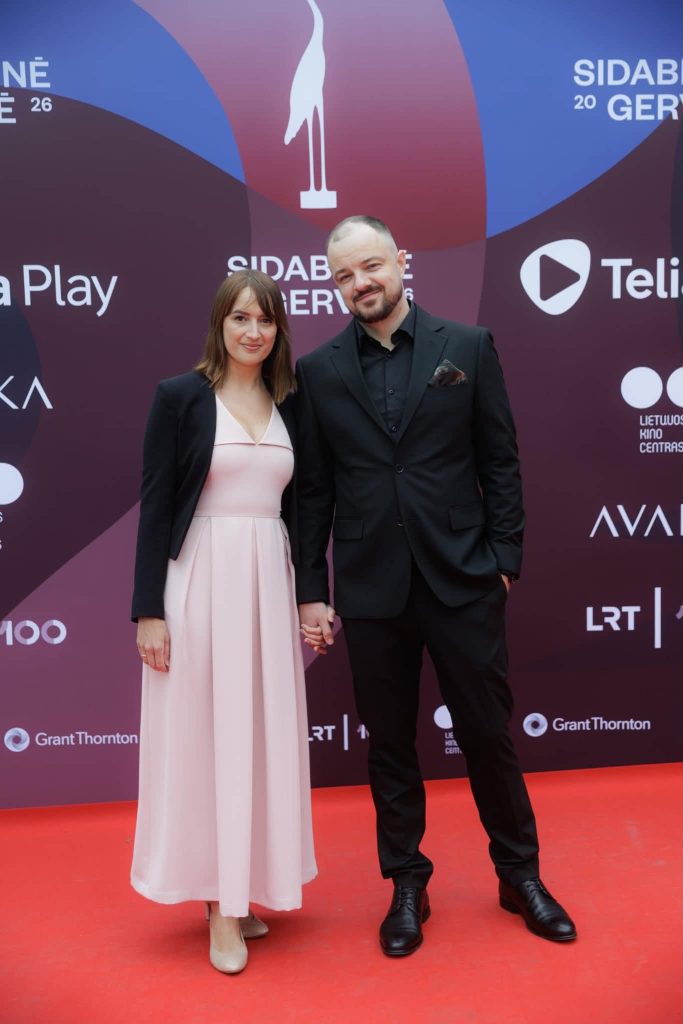
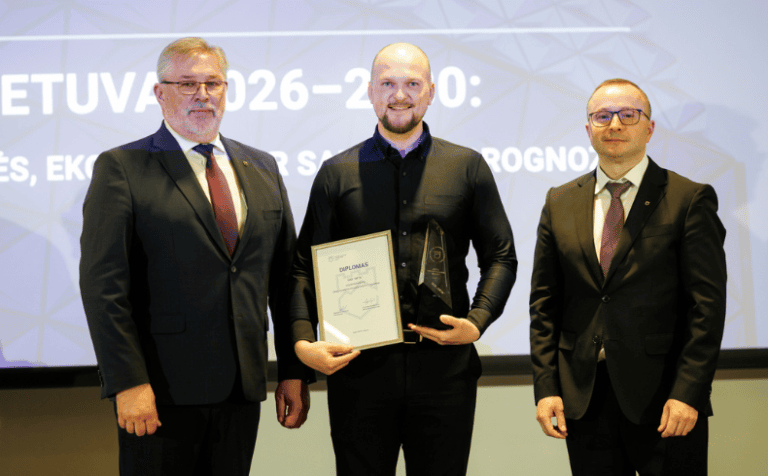
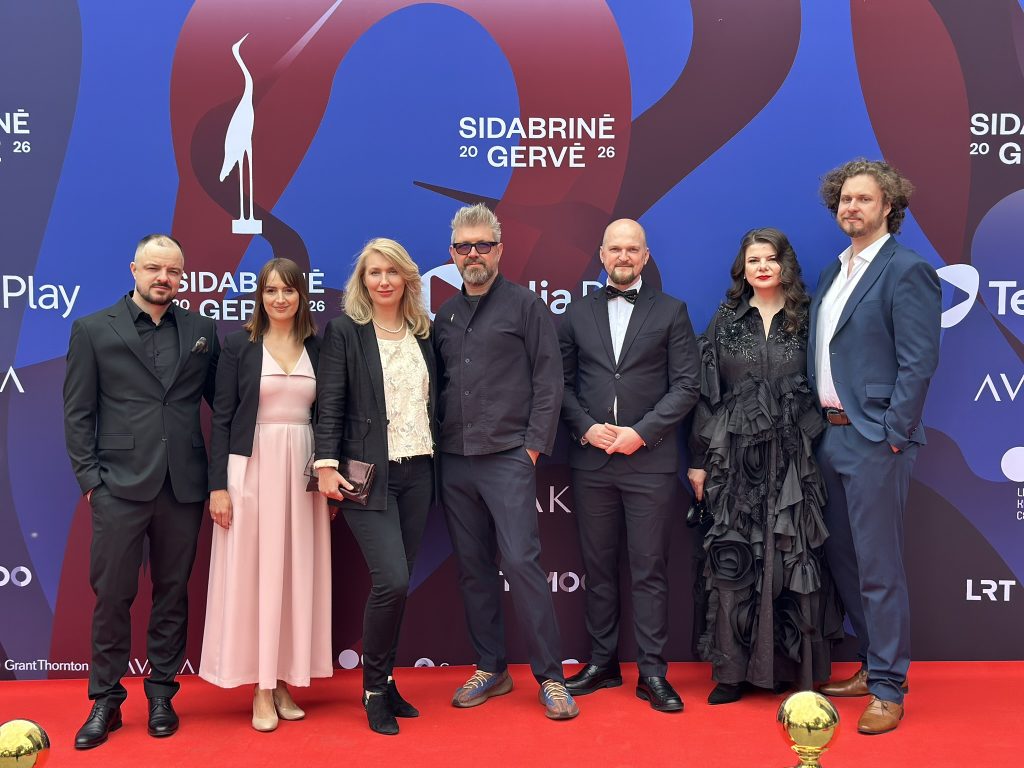
The “Silver Cranes” Awards—a wonderful event for the entire film community a celebration. And recognition is always nice,” said directors Kristina Buožytė and Vitalijus Žukas, who won this prestigious award last weekend.
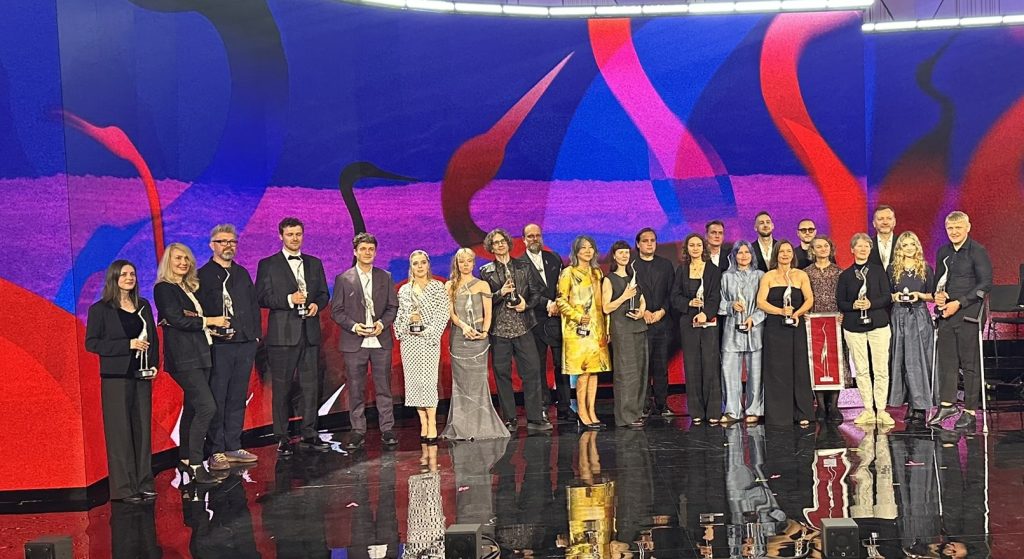
At the National Film Awards ceremony held on Sunday, K. Buožytė and V. Žukas’ virtual reality experience *Creation of the Worlds* triumphed in the “Best Animated Film of the Year” category.
Six years ago, another virtual reality experience by this creative duo—“Trail of Angels”—was awarded the Silver Crane for professional excellence.
– What does this award mean to you personally? – we asked the creators of the film.
V. Žukas: It’s like the Lithuanian “Oscar.” And recognition is always very important and gratifying.
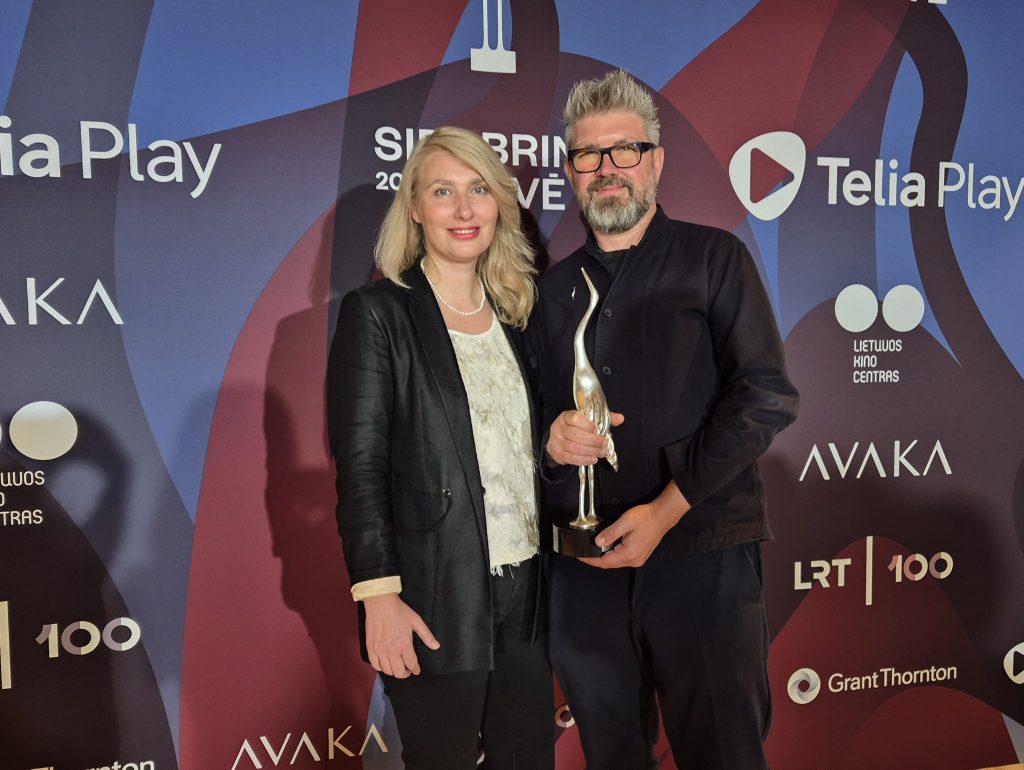
K. Buožytė: The “Silver Cranes” Awards are a truly wonderful celebration for the entire film community. It’s a real pleasure to hold this crane in my hands. For us, it’s the most cherished award we could have hoped for. Making a film is very, very hard work. It’s created by large teams of people. It’s wonderful that there’s a celebration like this and an opportunity to thank everyone publicly.

– Do you feel that virtual reality is beginning to be recognized in Lithuania as a fully-fledged art form?
K. Buožytė: In Lithuania, we are among the pioneers of virtual reality. With “Trail of Angels” and “Pasaulių suvėrimas,” we participate in international festivals and present these works in Lithuania and around the world. Everywhere we go, we sense the audience’s interest.
Virtual reality is a platform where we strive to create content that is on par with traditional formats in terms of quality. And good content is well-received because it is impactful.
V. Žukas: Virtual reality is a fully-fledged art form. And interest in this medium is growing; there are more and more venues showcasing virtual reality works, and international competitions and festivals are now including VR programs in their awards. Therefore, it’s safe to say that global recognition is already a reality.
– And in Lithuania?
V. Žukas: It’s hard to say. On an international scale, Lithuania is one of the leading promoters of virtual reality productions. In fact, Lithuanian works are regularly featured at the Venice International Film Festival. The festival’s curators speak extensively about this, and the world knows that Lithuanians are presenting their culture on a new platform.
It’s great that there are as many as two VR cinema chains in Lithuania where you can watch virtual reality films. This means there’s interest, and it’s growing. It’s interesting to note that more people in Lithuania saw *Trail of Angels* than the third installment of *Incarnation*.
– What emotions and states of mind among the audience are most important to you?
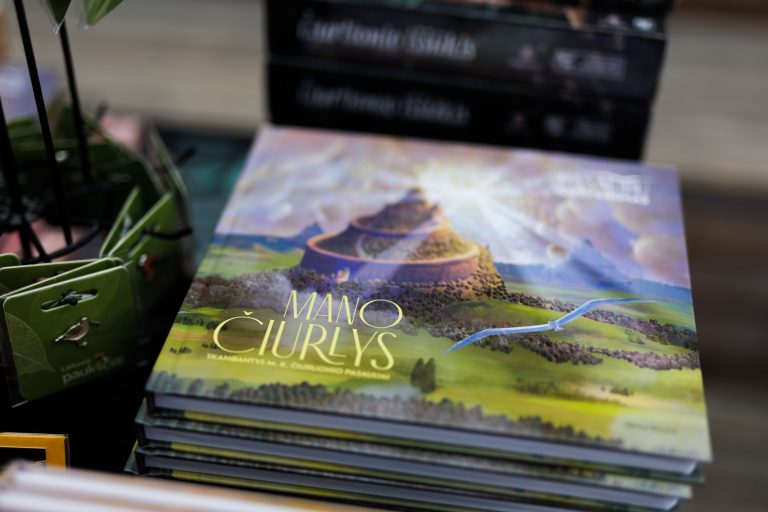
K. Buožytė: A virtual reality platform is a tool. It’s important to us that the work be emotionally impactful. And the platform should help achieve that. M. K. Čiurlionis’s works are particularly well-suited to a virtual reality platform because he lived in his own creative world, from which his works emerged.
It is the virtual reality platform that allows us to step into his world, which is made up of both images and music. This platform allows us to experience the unity of his world.
V. Žukas: We’re constantly rushing around, working, solving problems, and dealing with anxiety and stress. Time seems to be moving faster and faster.
The most terrible thing is that people don’t have time to stop and feel. But we invite you to pause and see how beautiful the world is, and how many wonders it holds. We invite you to look within yourself—and see how many wonders lie there.
What matters most to us is that the audience gets swept up in the moment, forgets everything else, and rekindles those feelings we had as children, when everything was new and magical.
– And what was technically the most difficult part of creating *Trail of Angels* and *Pasaulių Creation of Worlds”?
K. Buožytė: M . K. Čiurlionis’s works are full of nuances that you have to look closely at. They are so meticulous and subtle. That’s why our works had to be like that, too. The hardest part was creating a sense—so that people would not only see but also feel M. K. Čiurlionis’s works. You can’t work with broad brushstrokes here. You have to delve into the fine details that are invisible to the viewer but allow them to experience the emotion. We spent a long time analyzing Čiurlionis’s messages, and now we want all viewers to see and experience them.
V. Žukas: With *The Creation of the Worlds*, we sought to convey messages that are important in every age—freedom, the creation of one’s own worlds, light, and faith. At the same time, we had to maintain the narrative thread of the story. That was the most challenging part—combining freedom and history.
– Is there sufficient infrastructure and funding in Lithuania for similar projects?
K. Buožytė: When we created “Trail of Angels” in 2018, there was basically no infrastructure at all—nowhere to show it.
Over the past year, together with Lukas Verpetinskas’s team—which is focused on the development of strategic production in Lithuania—we have built the infrastructure for this artistic space. We now have permanent locations in Klaipėda, Kaunas, Vilnius, and Druskininkai. We travel throughout Lithuania, striving to reach not only major cities but also regional areas, and we visit schools.
This is a massive undertaking that has required a great deal of energy, funding, and effort.
V. Žukas: We are grateful for the support we receive from the Lithuanian Film Center. We are putting Lithuania on the map with our VR projects, so we would like to see more funding opportunities for projects of this kind in Lithuania.
– In your opinion, in what direction is virtual reality heading? Toward art? Games?
K. Buožytė: I think it all depends on the creators, because they decide where things can go and what forms they can take. And those forms can be varied: video games, art, and many others. It’s clear that developing technologies and artificial intelligence will certainly facilitate creative processes. What used to take a very long time or was very difficult to tackle will take much less time and be easier to accomplish in the future. However, we must not forget that the role of creators and their unique style will always remain the most important aspect of any form of creativity.
V. Žukas: The situation is the same as with cinema. There is commercial and non-commercial auteur cinema. It’s exactly the same with virtual reality. It’s a very broad medium. It can be used for entertainment, games, and artistic projects. Virtual reality is almost nonexistent in feature films. There have been many experiments, but it seems that virtual reality simply hasn’t found its niche in this field. However, in documentary and animation, virtual reality as an art form is thriving and has very promising prospects.
– You’ve won your second Silver Crane. What’s next?
V. Žukas: We are currently developing our third virtual reality experience based on the works of M. K. Čiurlionis, which is scheduled to be released next year. It will complete the trilogy.
The backbone of the third part is M. K. Čiurlionis’s cycle “Signs of the Zodiac.” This part will emphasize cyclicality — in nature and in human life. We believe this will be the most powerful piece compared to the first two.
K. Buožytė: Čiurlionis’s work is so profound, so boundless, that it’s an endless joy to work with his pieces. We hope that the third piece will crown and bring the entire trilogy to a close. Or perhaps it will invite us to experience the works again and again. Thank you to everyone who watches, supports us, and writes such lovely messages. The audience’s appreciation is the most important award for us, and the Silver Crane is the most beautiful symbol of that.